- Guspira contrataciones:
- +34 630 265 547
- +34 695 797 056
- info@guspira.net


Declivi presents “GUERRA ENDINS”
14 de May de 2026
Aina Koda presents “T’has alçat”
21 de May de 2026Doble presents “Yo no lo sé”
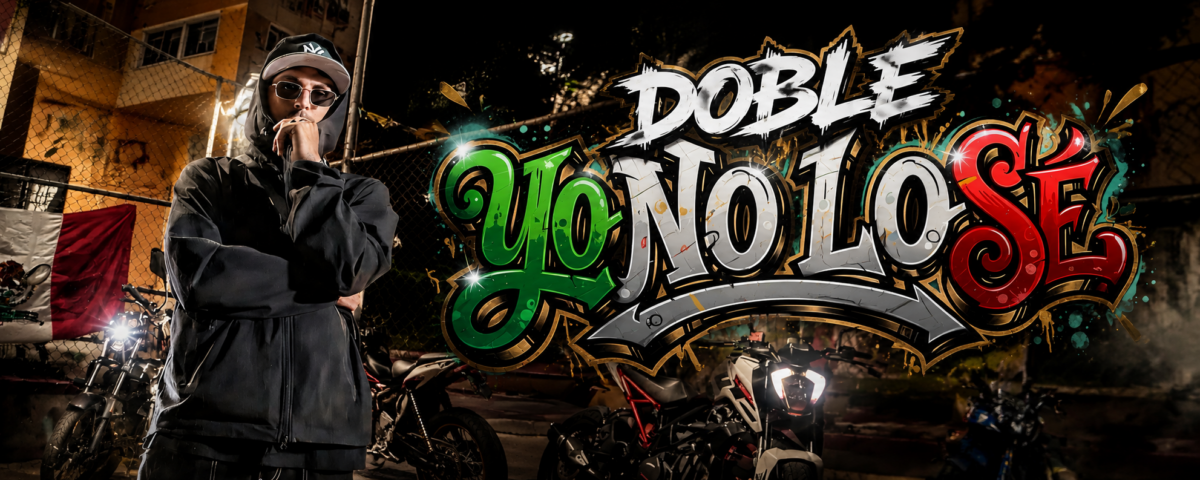
Doble is an artist who has been building a unique identity within urban music, developing a proposal that is difficult to categorize. His sound moves naturally between hip hop, reggae, funk, and trap, always sharing one common denominator: the need to express himself from an honest place, without formulas or artifices.
In recent years, the artist has continued consolidating his path with releases such as “3 AM”, a track that has already accumulated more than 30 million streams, and key experiences like joining L-Gante’s tour, which allowed him to connect with new audiences and gain greater confidence on stage. A process of growth that has evolved in parallel with an increasingly defined personal and artistic evolution.
In this new stage, Doble presents a project he has been working on for quite some time, reflecting a moment of profound change. The project was entirely developed in Mexico, specifically in Guadalajara, where the artist settled during this period to create from scratch, surrounding himself with new stimuli, collaborations, and ways of understanding music that ultimately had a direct influence on his sound.
Within this context comes “Yo no lo sé”, the first preview of his upcoming project and one of his most conceptually powerful pieces to date. The song brings to the table a conflict that is as intimate as it is universal: the constant pressure of having to know what to do with your life while everyone else gives their opinion from the outside.
Far from searching for easy answers, Doble builds an uncomfortable yet necessary discourse. The lyrics move between rage and vulnerability, reflecting the frustration of feeling misunderstood in an environment where judgment is abundant, but real support is scarce. “Yo no lo sé” is, in essence, an internal rebellion against this imposition of certainty.
On a sonic level, the track reinforces this message with a solid and direct production. Built around a 128 BPM rhythm and in the key of G minor, the single combines the strength of hip hop with an almost cathartic energy, generating a constant tension that accompanies the artist’s emotional discourse. The result is a piece that is not only heard, but deeply felt from within.